The AI-Native Supply Chain Platform.
Built for the creators, built for the consumers, and built for the agents right alongside them.
Experience.
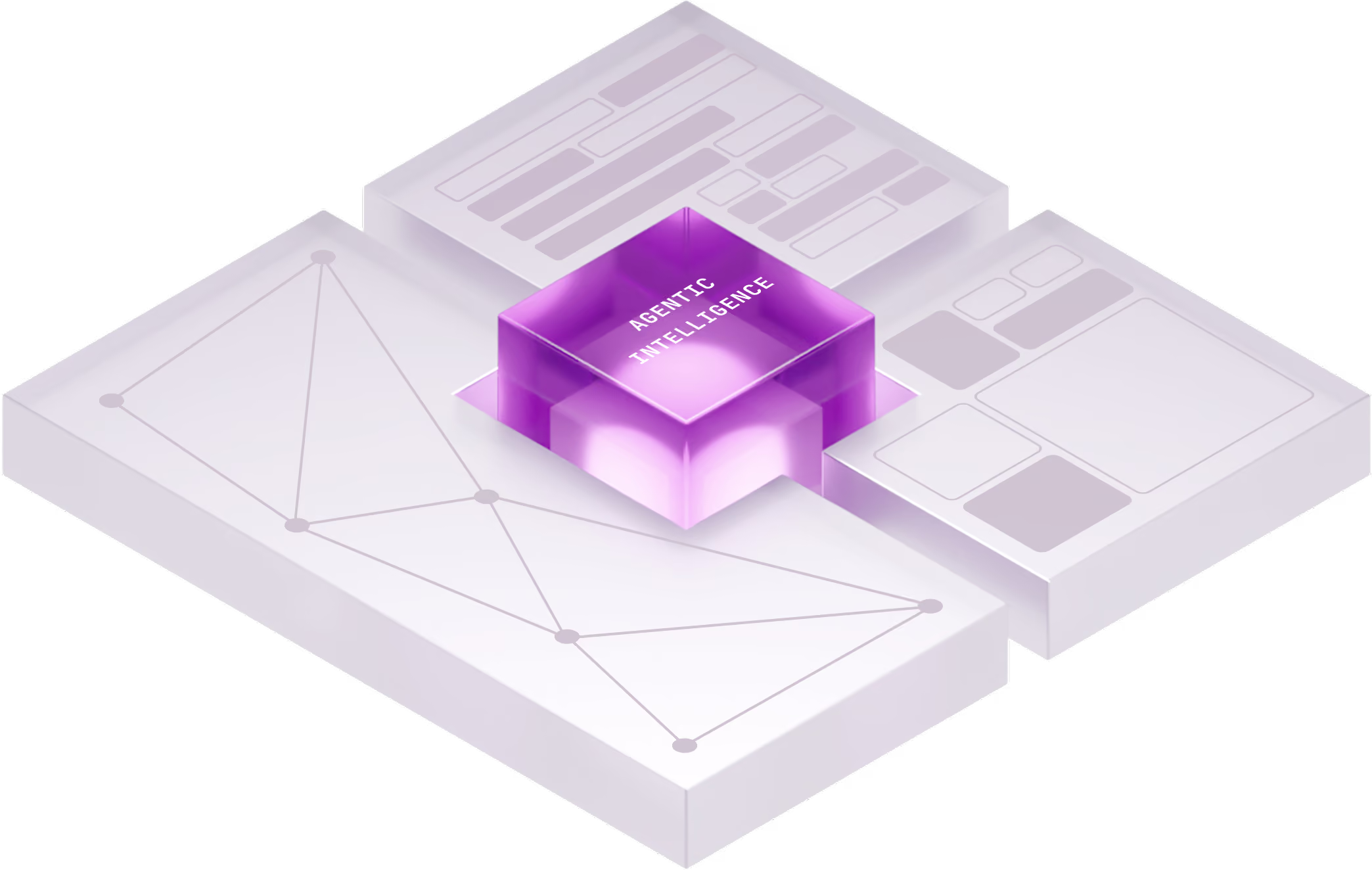
The analytical answer made operational, with an experience agent at its core.
Executive, planner, and operator each read the same Decision Product through an interface shaped to their role. The application is optional — the system of record stays the system of record.
Sequence.
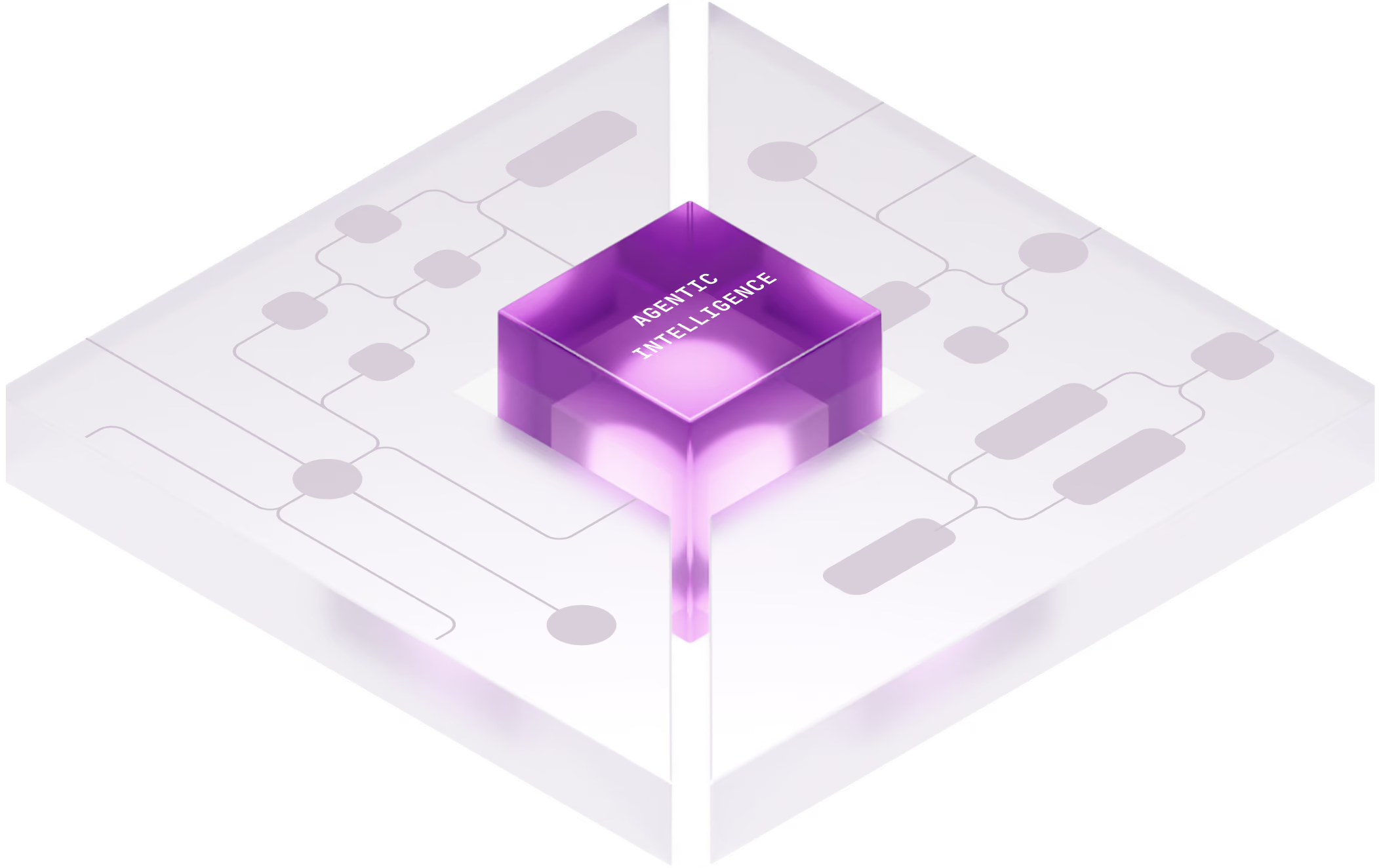
The connective tissue, with a sequence agent at its core.
Decisions stop being silos when they share a sequence — within a domain, across domains, and across time. Today’s stock-transfer shapes a routing decision two months out.
Algorithm.
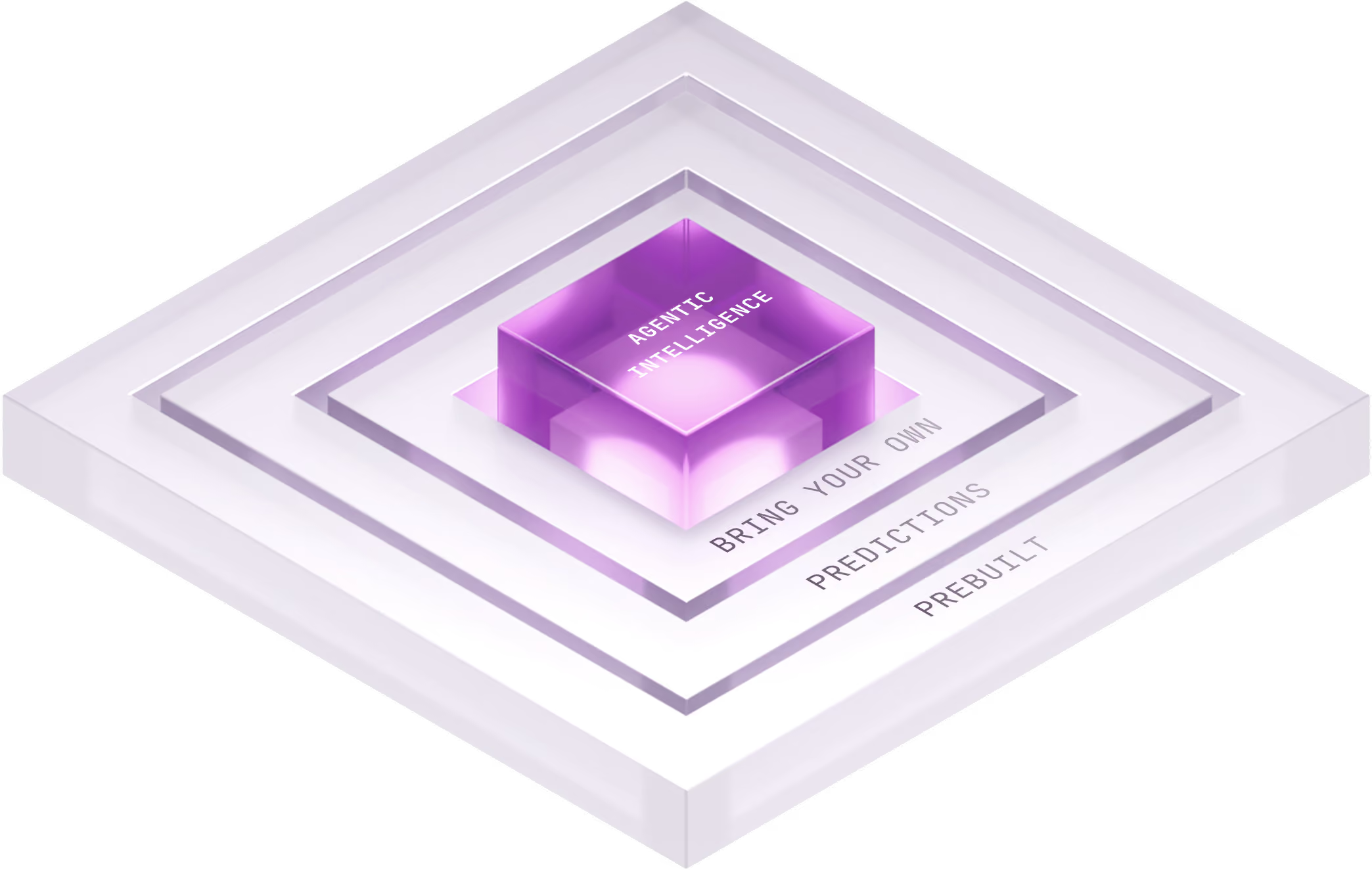
Algorithms packaged as Notes: atomic units of logic decoupled from applications.
Atomic units of logic, decoupled from applications. Blue Notes ship pre-built; Green and Purple extend them. Supply chain foundational models return predictions in seconds.
Data.
The decision foundation, with a data agent at its core.
An extensible semantic architecture unifies every source — ERPs, lakes, warehouses, operational systems, external signals. Real-time and batch in one model. Data flows in, decisions flow back.
Agentic AI.
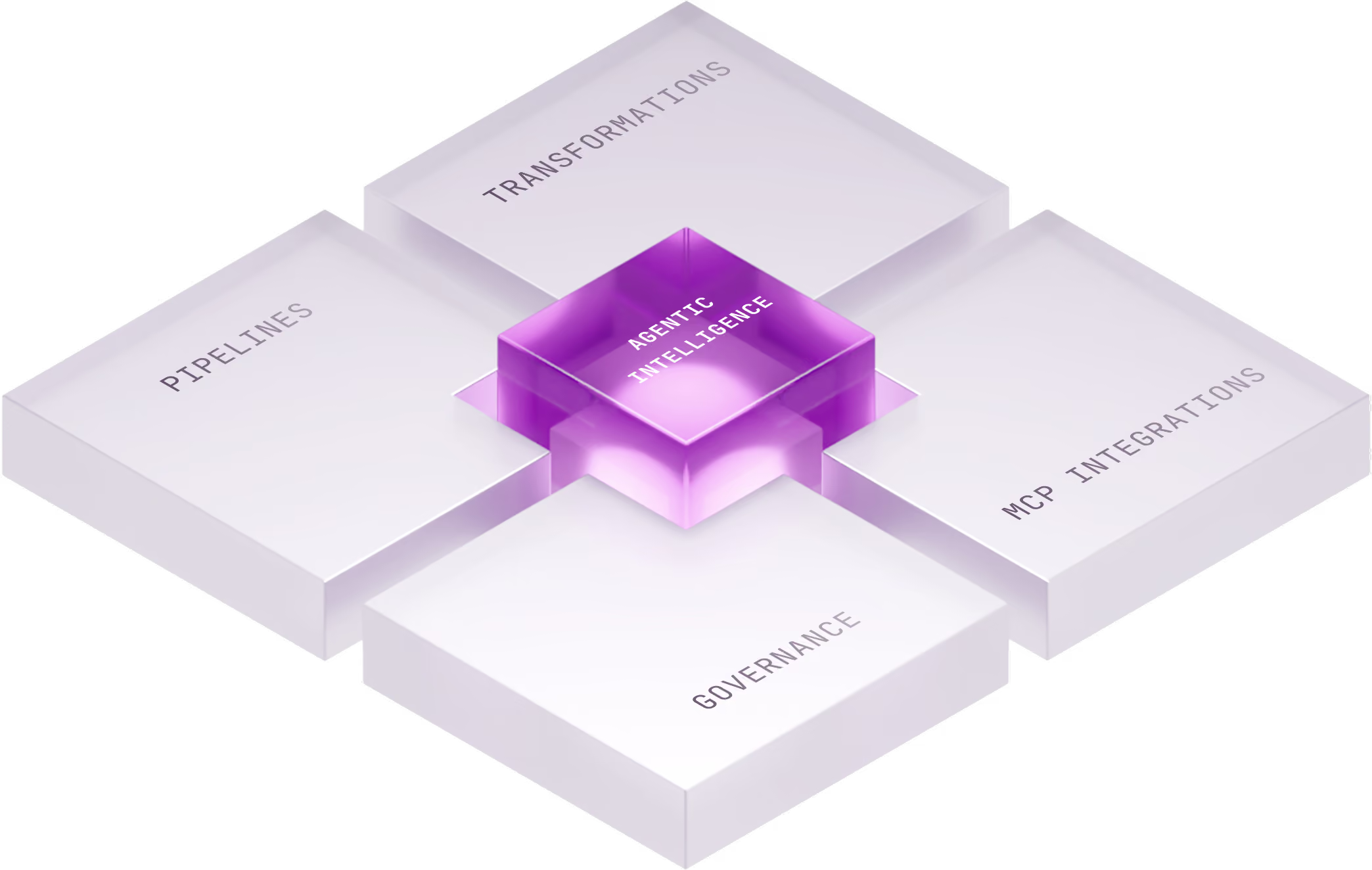
Every core aligns into one cylinder — the spine of the platform.
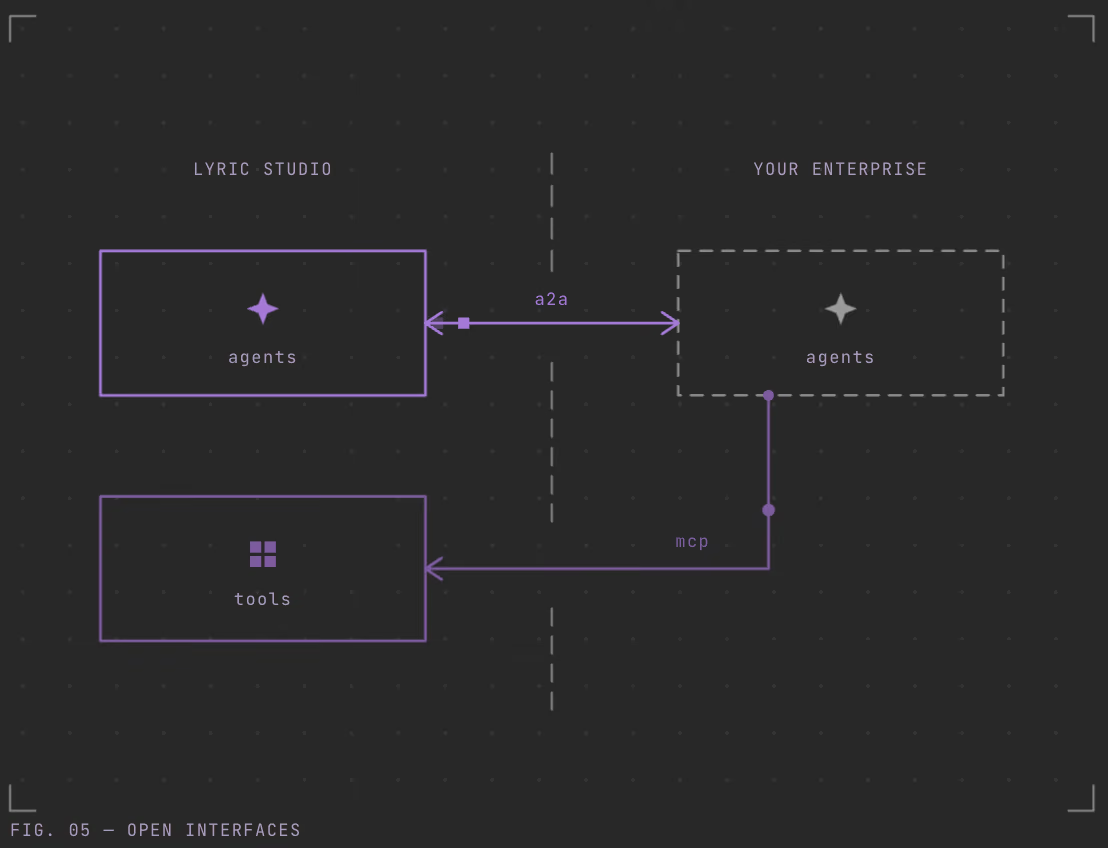
Each layer’s agent core stacks with the next. Together they form a single cylinder running through the architecture — agentic AI as an integral structure, not a shell on top. MCP and A2A connect it outward.

Every layer knows supply chain
Every layer is written for supply chain, not configured to look like it. SKU, location, BOM, and time-phased primitives in the data layer. Forecasting, inventory, and network science in the algorithm layer. Multi-echelon scenarios in the sequence layer. Planner-grade interfaces in the experience layer. Built for supply chain over two years, by a team focused on nothing else.
A stack of BI, ML, and optimization tools can be assembled to look similar. It doesn't speak supply chain. The integration cost compounds with every use case, every upgrade, every team handoff. Lyric paid that cost once, for everyone.
Agents at every layer
Every action an agent takes is grounded in the semantic architecture, traceable and auditable. The train tracks stay visible even when an agent is the one laying them down.
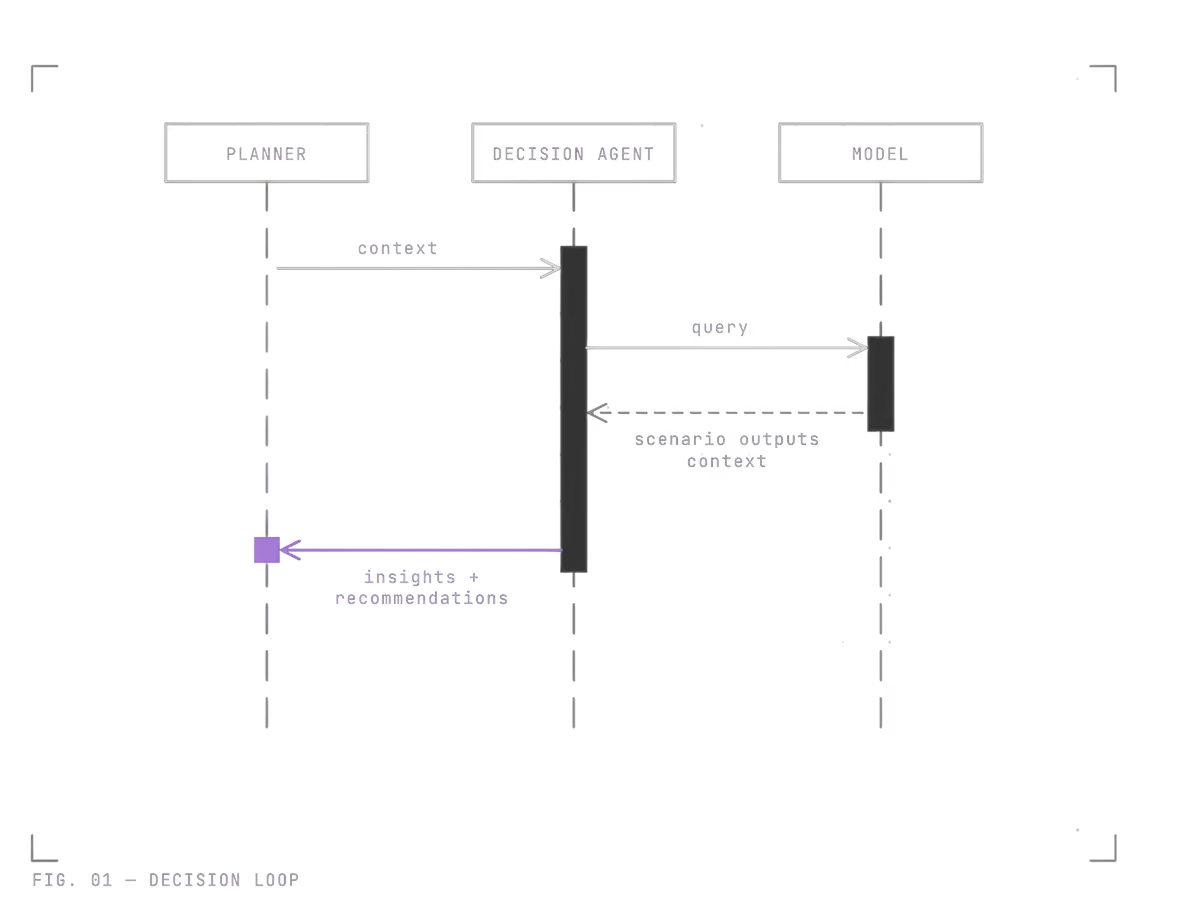
For Decisions
Pre-built decision agents that work alongside planners and analysts. They surface insights, explain the what-and-why, run scenarios, and recommend actions.
For Creators
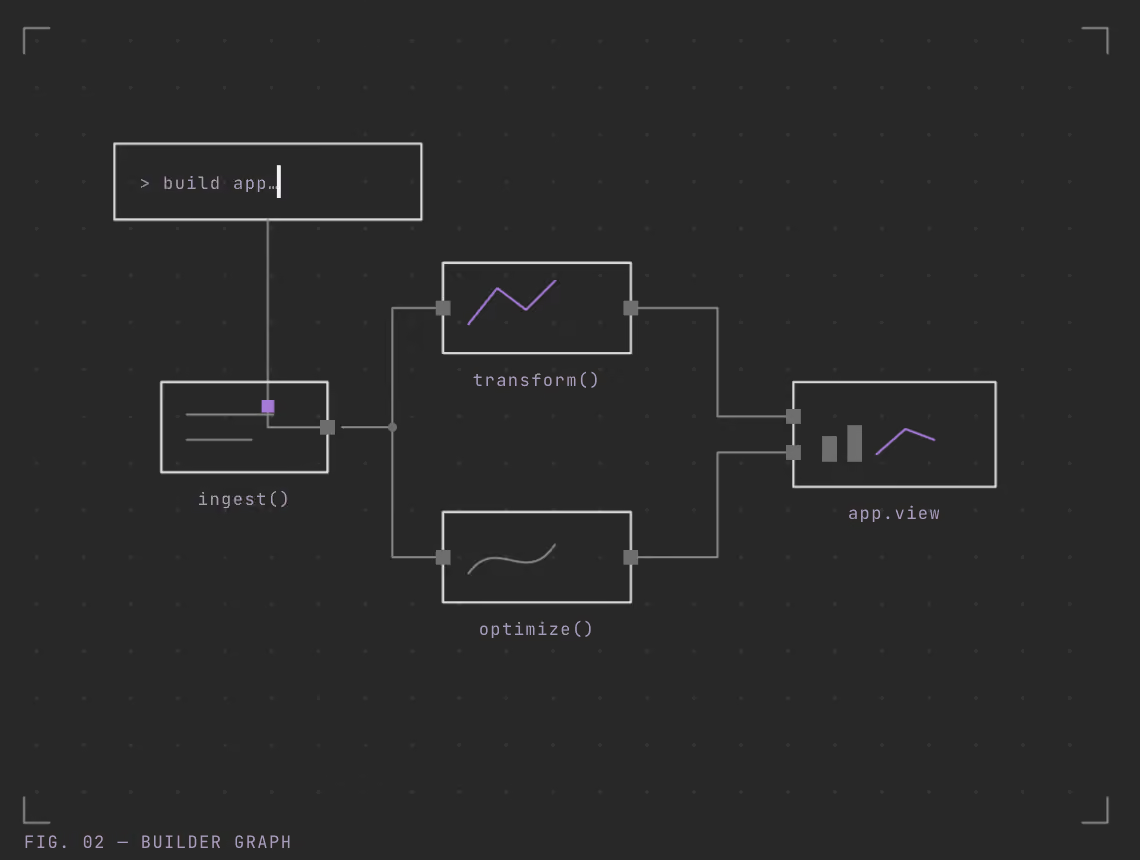
Agents that compress application development. They help users build data pipelines, assemble algorithms, and construct experiences through conversational interfaces.
For Innovators
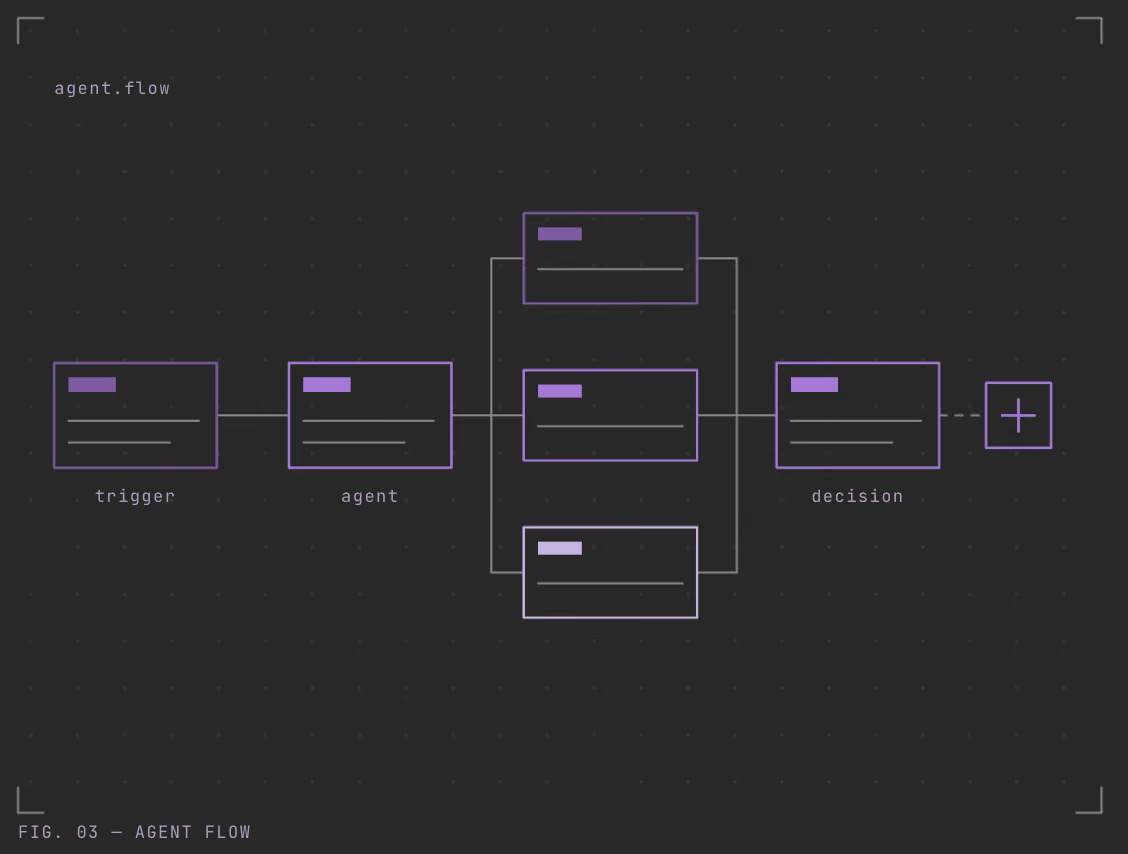
Build your own agents without writing a single line of code. Use them to handle the decisions that don't fit neatly into existing categories.
Core Intelligence
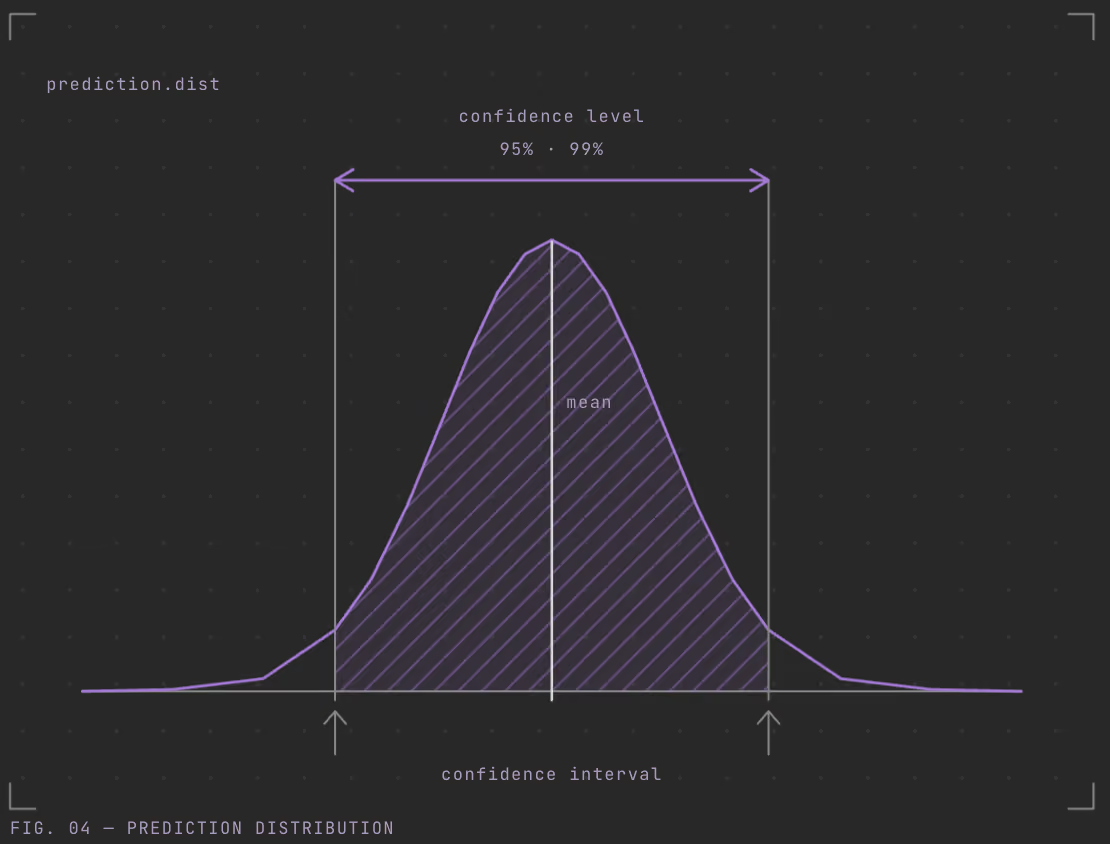
AI models trained on supply chain data, not retrofitted LLMs. The foundation needed to quickly reason about supply chain problems.
Open Platform
Open by design. MCP connects Lyric Studio's data and capabilities to the outside world. A2A lets Lyric Studio's agents talk directly to the ones your enterprise already uses.
Built for the reality of your role
The Creator: The Supply Chain Engineer
The Consumer: The
Planner
Data Science, IT, and Data Engineering
Seamlessly connect with any system - custom automated closed-loop integration









See Lyric Studio in action.
Watch a working session that takes a real supply chain decision through all four layers, from raw data to the moment a planner commits.
Frequently asked questions
Lyric Studio deployments have gone live in as little as 12 weeks from conception. Actual timelines depend on scope, data complexity, integration footprint, and the specificity of the decisions being modeled. Customers go live with one decision, expand to the next, and keep building.
Both through Lyric's Notes architecture. Blue Notes are Lyric-built and Lyric-maintained content (Science Notes, Logic Notes, Utility Notes) that ship as part of the standard catalog in every Lyric Studio instance. Green Notes are customer-built and customer-maintained content, developed in the Note Console and available in the customer's own section of the Note Catalog.
Yes. Lyric Studio is the intelligence system that operates alongside the systems of differentiation and records that customers already have. Existing ERPs, planning systems, data warehouses, and operational systems can stay in place. Lyric Studio fills the gaps around them and handles the decisions those systems were not designed to make.
All three. Modelers and data scientists (Creators) work in code, configure data models, write optimization logic, and version their work. Planners and operators (Consumers) run scenarios, weigh tradeoffs, and commit decisions in the applications Creators have built. Supply chain leaders use the platform to model, decide, and execute on the questions the business is actually asking.
Lyric Studio supports decisions across network, production, fulfillment, inventory, and risk, spanning strategic, tactical, and operational horizons. Specific decision areas include network design, transportation optimization, inventory strategy, and policy simulation. The list keeps growing because the platform is composable. Customers make decisions specific to their business.
Decision intelligence is the category of platforms built around supply chain decision-making rather than the modeling or planning cycle. It combines math-based optimization, real-time data, and human judgment, so the work of choosing happens in the platform instead of in spreadsheets. Modeling and Planning systems output numbers. Decision intelligence outputs decisions.
Lyric Studio is the AI-native platform built to empower the Decision Mesh. It combines a semantic data layer, an expansive catalog of algorithms, modern elastic compute, and a self-service, composable interface. Customers compose decision logic, sequence decisions, and transform data through code or no-code without rebuilding pipelines.
APS is built for the planning cycle. Lyric Studio is built for decision-making, including the scenarios, ad hoc questions, and connections that fall outside the cycle. The two solve different problems and run together in most customer deployments.
Generic AI agents and copilots are language models behind a chat interface that generate answers from text patterns. Lyric Studio is math-first: decisions come from optimization, simulation, and constraint solvers. Decision Agents inside the platform orchestrate that math, run scenarios, and surface tradeoffs the user can act on.
The Decision Mesh is the view of every decision a supply chain runs on, across network, production, fulfillment, inventory, and risk, spanning strategic, tactical, and operational horizons. It is bidirectional and composable: decisions feed forward, backward, and across silos, and can be added, swapped, or reconfigured as the business changes. Every supply chain organization already has a Decision Mesh. The question is how visible and connected it is.
Lyric Studio is math-first and covers the techniques real supply chain decisions require:
- Network optimization using linear programs (LPs) and mixed-integer programs (MIPs), with Gurobi as the solver for NP-hard network design problems
- Transportation optimization, including GPU-accelerated routing on Nvidia cuOpt
- Inventory strategy optimization for safety stock, replenishment, and service level policies
- Policy simulation for testing sourcing, routing, and inventory changes before implementation
- Predictive models trained on billions of rows of data for inputs like production run rates and warehouse processing rates
The platform's sequence layer sits between models and applications, letting modelers daisy-chain models in no-code and run them on the right compute resources. See The Technology Behind Modeling at Scale for the full treatment.